

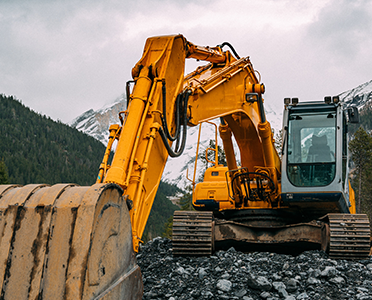


Agricultural Machinery Parts Market Outlook 2026
The agricultural machinery parts business has never stood still—but 2026 is shaping up to be a year where the pace of change accelerates significantly. From electrification and automation to shifting dealer landscapes and evolving farmer expectations, the market is being reshaped by forces that weren't on anyone's radar five years ago.
If you're running an aftermarket parts business, this isn't just background noise. These shifts directly affect what inventory you should stock, which suppliers to partner with, and how to position yourself when farmers and equipment operators come calling.
Here's a clear-eyed look at where the market stands and where it's heading.
The Big Picture: Market Size and Growth Drivers
The global agricultural machinery market is estimated at approximately $165 billion in 2026, with powered agricultural equipment representing a substantial segment of that figure.
The electric tractor market alone is projected to grow from $310 million in 2026 to $1.95 billion by 2035—a compound annual growth rate of 22.7%.

This explosive growth does not mean electric tractors will fully replace diesel models anytime soon. Electric adoption is led by pilot projects and regional rollouts: Europe leads in charging infrastructure, while Asia-Pacific is the fastest-growing market for agricultural automation.
For aftermarket dealers, the key takeaway is simple:
The overall equipment installed base keeps expanding, so the parts market will not shrink. Traditional combustion-engine machinery will remain dominant for decades. A large aging fleet still requires regular replacement and maintenance parts, creating steady long-term demand.
At BuymachineryParts, we see this trend firsthand. Our catalog covers 10,000+ parts for excavators, loaders, forklifts and tractors, and we continue expanding as the global equipment population grows.
Labor Shortages Are Reshaping Equipment Decisions
This is perhaps the most underappreciated driver in today's market.
U.S. farm employment dropped by roughly 209,000 workers in just two months during 2025, and the trend shows no sign of reversing. Wages are climbing, domestic labor isn't filling farm roles, and seasonal labor constraints are increasingly chronic rather than cyclical.
The practical consequence: farmers and agricultural operations are investing in automation not because it's trendy, but because the math finally works. Autonomous tractors, robotic harvesters, and precision weeding systems are being evaluated on straightforward payback periods—when labor costs exceed automation costs within an acceptable window, the purchase decision is relatively simple.
For parts dealers, this creates a bifurcated challenge:
-
Traditional equipment (tractors, combines, sprayers with diesel engines) will need maintenance parts for years to come. These are your bread and butter.
-
Precision agriculture equipment and electric machines require different parts, different expertise, and often different suppliers. The supply chains are less mature, and diagnostic requirements are higher.
The dealers who will thrive are those who don't abandon their traditional business but start building competency in the new segments. Trying to serve only one side of this equation leaves money on the table.
"Staying narrow in 2026 means losing ground. We've invested in building out our inventory across both traditional mechanical parts and the electronic components that precision equipment requires."
Precision Agriculture Is Now Standard
Aftermarket Channel Dynamics: What's Actually Happening
The 2026 State of the Automotive Aftermarket survey offers some insights worth considering:
-
Most aftermarket professionals expect 2026 sales performance to be roughly flat with 2025. This isn't a boom year, but it's not a collapse either.
-
Consumer behavior is shifting: people are holding onto their existing equipment longer. This actually helps aftermarket demand—older equipment needs more frequent maintenance and replacement parts.
-
ADAS is reshaping what's required for diagnostics and calibration after repairs. This is more advanced in automotive, but the same trajectory applies to agricultural equipment as autonomy features proliferate.
For agricultural parts specifically, the independent dealer channel remains critical. Farm equipment operators often need parts quickly—during planting season, during harvest, when a machine breaks down mid-field. Big-box retailers and pure-play e-commerce can't always meet that urgency. Speed and availability are still competitive advantages that online-only players struggle to replicate consistently.
This is why we built our operations around fast fulfillment. When you're running a combine during harvest and a belt fails, waiting a week for a part isn't an option. We stock US inventory for critical parts and offer expedited shipping because we know what our customers' priorities are.
Regional Variations Worth Watching
North America: Strong demand for parts supporting large-scale row crop operations. Precision ag components are well-established. Labor constraints are driving automation investment.
Europe: Electric equipment adoption is further along, supported by charging infrastructure and regulatory incentives. The installed base of precision-equipped tractors is older, creating parts demand for retrofit and replacement.
Asia-Pacific: The fastest-growing region for agricultural automation. Smaller-scale farms are adopting mechanization. Aftermarket infrastructure is less developed in some markets, creating opportunities for well-positioned distributors.
Developing Markets: Africa, Southeast Asia, and South America represent long-term growth, but near-term infrastructure and financing challenges slow adoption of both new equipment and aftermarket services.
Our export operations span all of these regions. Each market has its own characteristics—lead time expectations, certification requirements, payment terms—but the underlying demand for quality aftermarket parts at reasonable prices is universal.
Supply Chain: Still Fragile, Still Evolving
The disruptions of 2020-2022 forced most serious aftermarket players to rethink their supply chains. The lessons stuck:
-
Diversification matters. Single-source suppliers for critical parts categories are a liability.
-
Inventory strategy has shifted. The instinct to minimize inventory in favor of just-in-time delivery has given way to a more balanced approach—holding more stock for fast-moving parts while maintaining flexibility for special orders.
-
Lead time predictability has improved but remains a challenge for components sourced from overseas, especially electronics and precision-machined parts.
For 2026, tariffs and trade policy remain a wildcard. Equipment and parts sourced from China, India, and other manufacturing hubs face potential cost impacts. Dealers who established alternative sourcing—domestic suppliers, nearshoring arrangements, diversified international partners—are better positioned than those who didn't.
We've taken this to heart. Our supply network spans multiple manufacturing regions, and we maintain safety stock on our highest-volume SKUs while keeping flexibility for special-order items. When one supply channel gets disrupted, we pivot. That's not optional anymore—it's table stakes for staying in the game.
Practical Business Checklist for Dealers
High Priority
-
Optimize your inventory mix to include precision agriculture sensors, controllers and electronic components.
-
Secure backup suppliers for all core parts categories.
-
Build basic diagnostic capability for common electronic system faults.
Medium Priority
-
Establish partnerships with electric and autonomous equipment manufacturers.
-
Benchmark your delivery lead times against local market expectations.
-
Launch online ordering with same-day or next-day shipping for fast-moving items.
Ongoing Strategy
-
Monitor regional equipment fleet age data to forecast future parts demand.
-
Track precision agriculture adoption rates among your customer base.
-
Invest in staff technical training covering both mechanical and electronic parts knowledge.
How Buymachineryparts.com Fits Into This Picture
We're not writing this to sell you something. We're writing it because these are the conversations we have every day with parts buyers who are trying to figure out the same things you're trying to figure out.
What We Stock
Engine parts, hydraulic components, electrical systems, undercarriage parts, body parts, and maintenance items
Equipment Coverage
Excavators, loaders, forklifts, and tractors from Kubota, Bobcat, Caterpillar, and Komatsu
What We Offer
US inventory, competitive pricing, technical support, and shipping options that match your urgency
What We're Building
Expanded precision ag coverage, better inventory tools, and faster fulfillment for special orders
The Bottom Line
The agricultural machinery parts market in 2026 isn't facing a crisis. It's facing a transition. Traditional equipment still dominates, but automation and electrification are growing fast enough that ignoring them is a risk.
The dealers who will do well five years from now are those who:
- Serve their current customers well—the traditional equipment base is massive and will need parts for decades
- Build competency for what's coming—precision components, electronic diagnostics, and eventually electric equipment parts
- Run efficient operations—tight inventory management, reliable supply chains, fast service
None of this is revolutionary. But executing on fundamentals consistently, while keeping one eye on where the market is going, is how sustainable businesses are built.
The market isn't waiting. Neither should you.
Need Parts for Your Equipment?
Browse our catalog of 10,000+ aftermarket parts or contact us for wholesale and custom orders.


 Contact Us
 Help Center
 Chat Online


